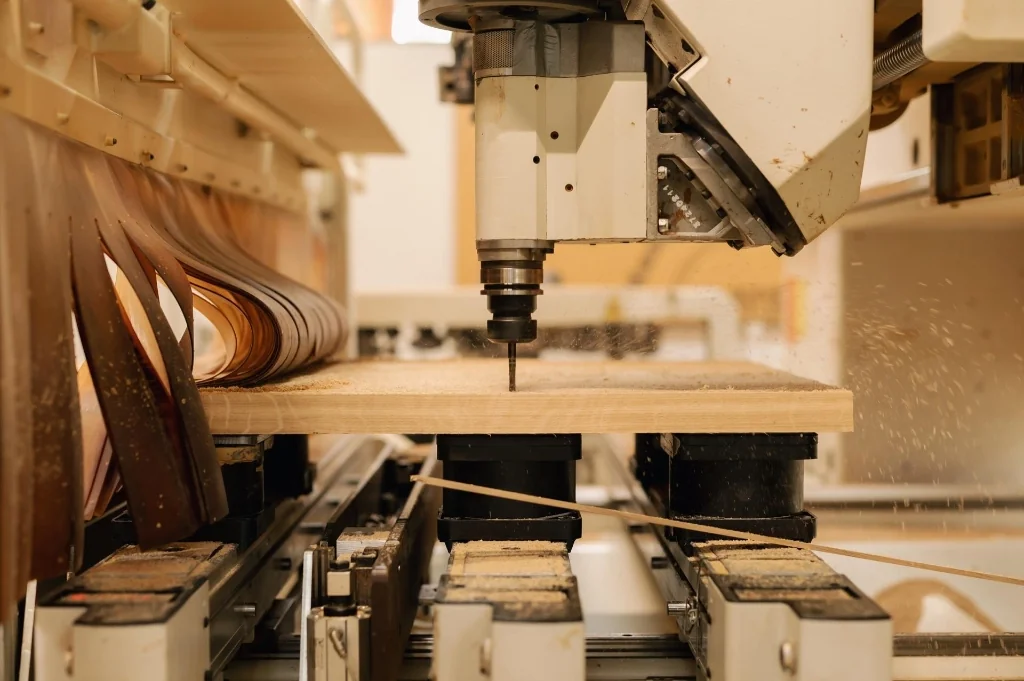
CNC cutting · routing · drilling
What does this service do?
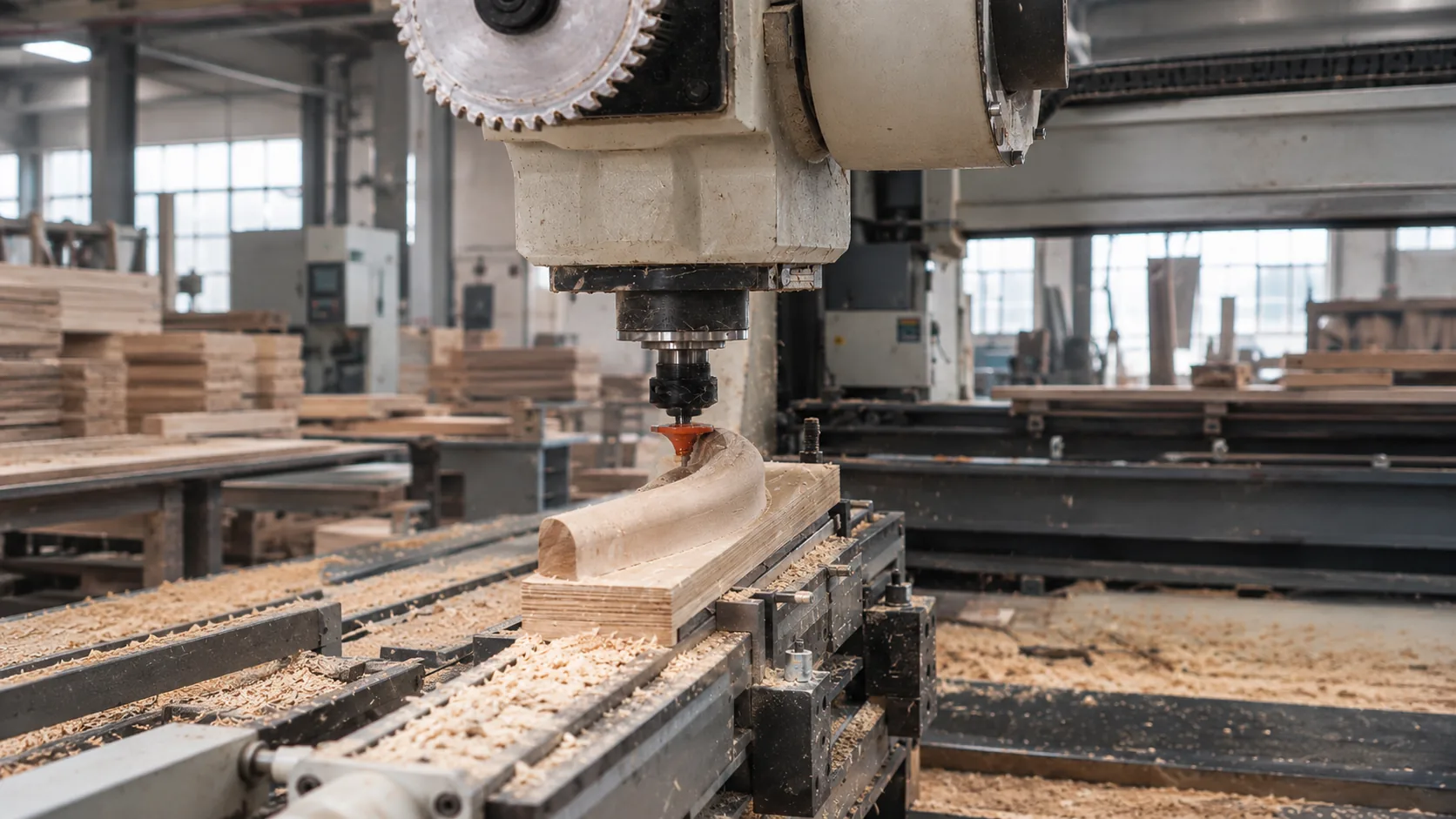
CNC wood routing converts a drawing into toolpaths for contour cutting, grooves, holes and joinery in solid timber or engineered panels. Feasibility depends on the material, blank size, part geometry, tooling and the acceptance criteria agreed for each order.
When is this service suitable?
- Repeated parts made from one approved drawing or master sample.
- Panels, doors, table components and joinery that require contours, grooves or holes.
- Assembly features that can be defined with clear dimensions.
Confirm these points before ordering
- A rendering does not replace a dimensioned drawing.
- Internal corners are limited by cutter radius and must be reviewed when a square corner is required.
- Tolerance must specify the feature, material and measurement method.
Custom CNC wood machining from drawings or samples
All three input routes can lead to the same order, but they provide different levels of certainty for programming and quotation.
From requirements
State function, dimensions, material, quantity and delivery condition. Missing geometry must be clarified before a method is confirmed.
From a drawing
A drawing should include units, revision, datum faces and mating features. It is the clearest reference for sample approval and inspection.
From a sample
The sample must retain enough surfaces and edges to measure. Wear, distortion and reconstructed details must be agreed before approval.
Small-batch and production-volume CNC machining
Quantity affects more than unit price; it changes sampling, setup, inspection and revision control.
Small quantity
Programming, setup and sampling costs should be separated. Feasibility is confirmed after reviewing files, blanks and workshop schedule.
Production volume
Approve the sample, drawing revision, measurement points and nonconformity handling before scaling the batch.
How CNC cutting, milling and drilling differ
These operations often share one machining program, so they remain on one page unless SERP evidence supports separate intent.
CNC cutting
Separates blanks or creates the approved outer contour.
CNC milling
Creates grooves, steps, pockets, surfaces and depth-defined joints.
CNC drilling
Creates coordinate-based holes; diameter, depth and datum relationship must be defined.
Machining furniture parts and wood components
This application intent stays on the core service page until separate SERPs and enough verified cases, images and specifications justify a landing page.
Furniture parts
Doors, panels, frames and mating parts should be defined by drawings or a dimensional list.
Wood components
Define function, datum faces, joints and inspection criteria rather than only naming the product.
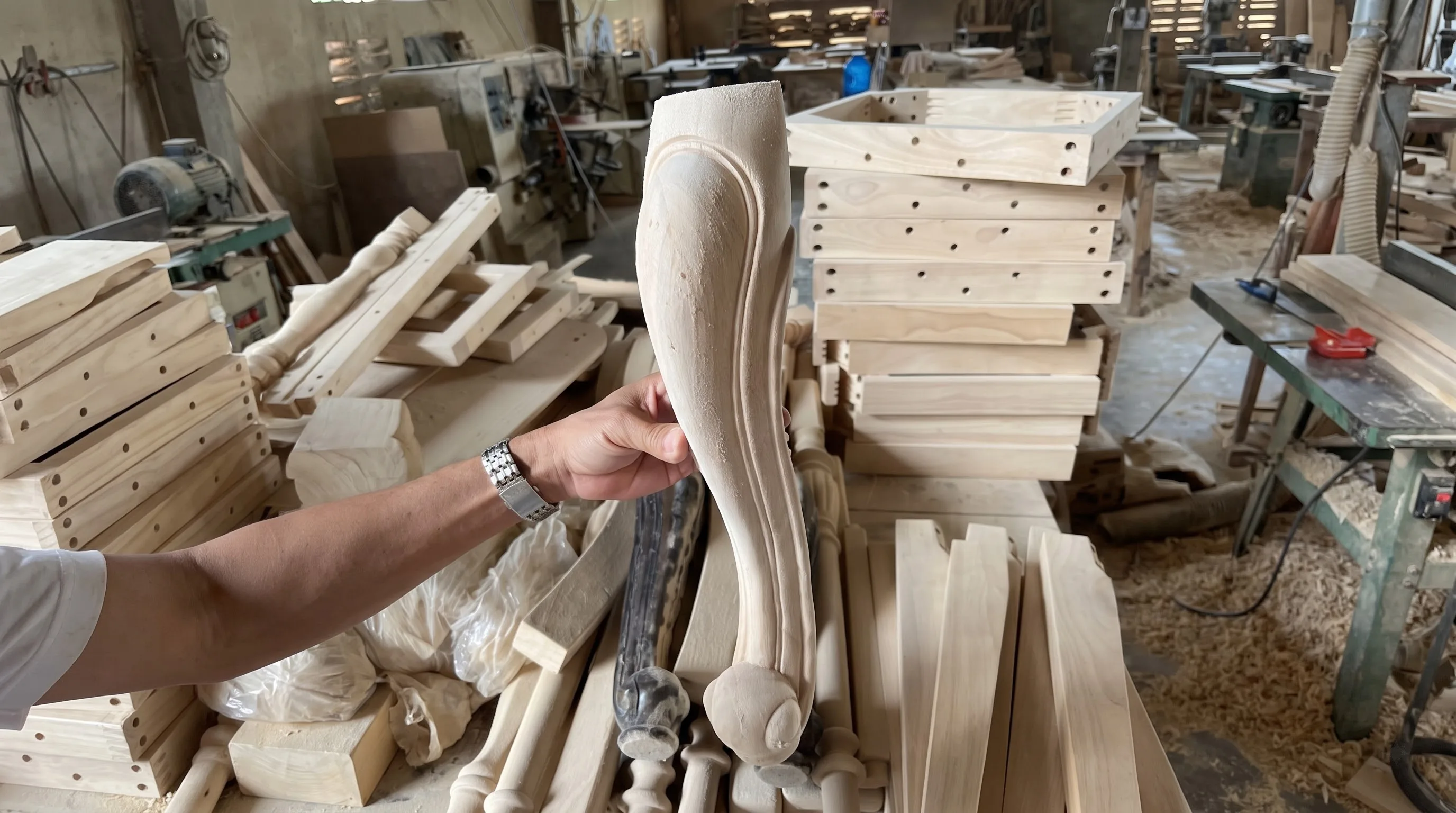
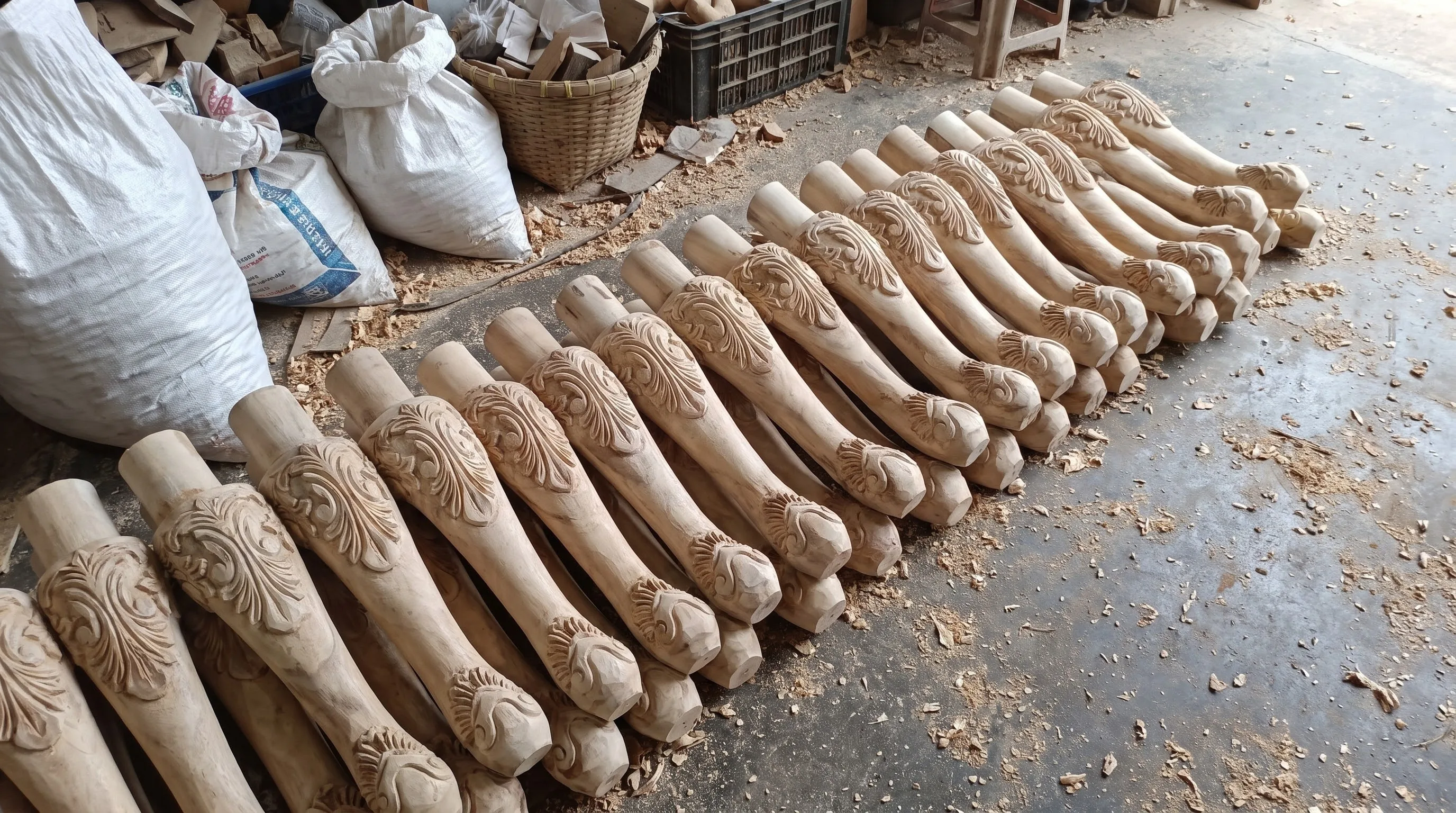
Furniture legs
Rotational legs usually suit turning; asymmetric features may require milling or carving.
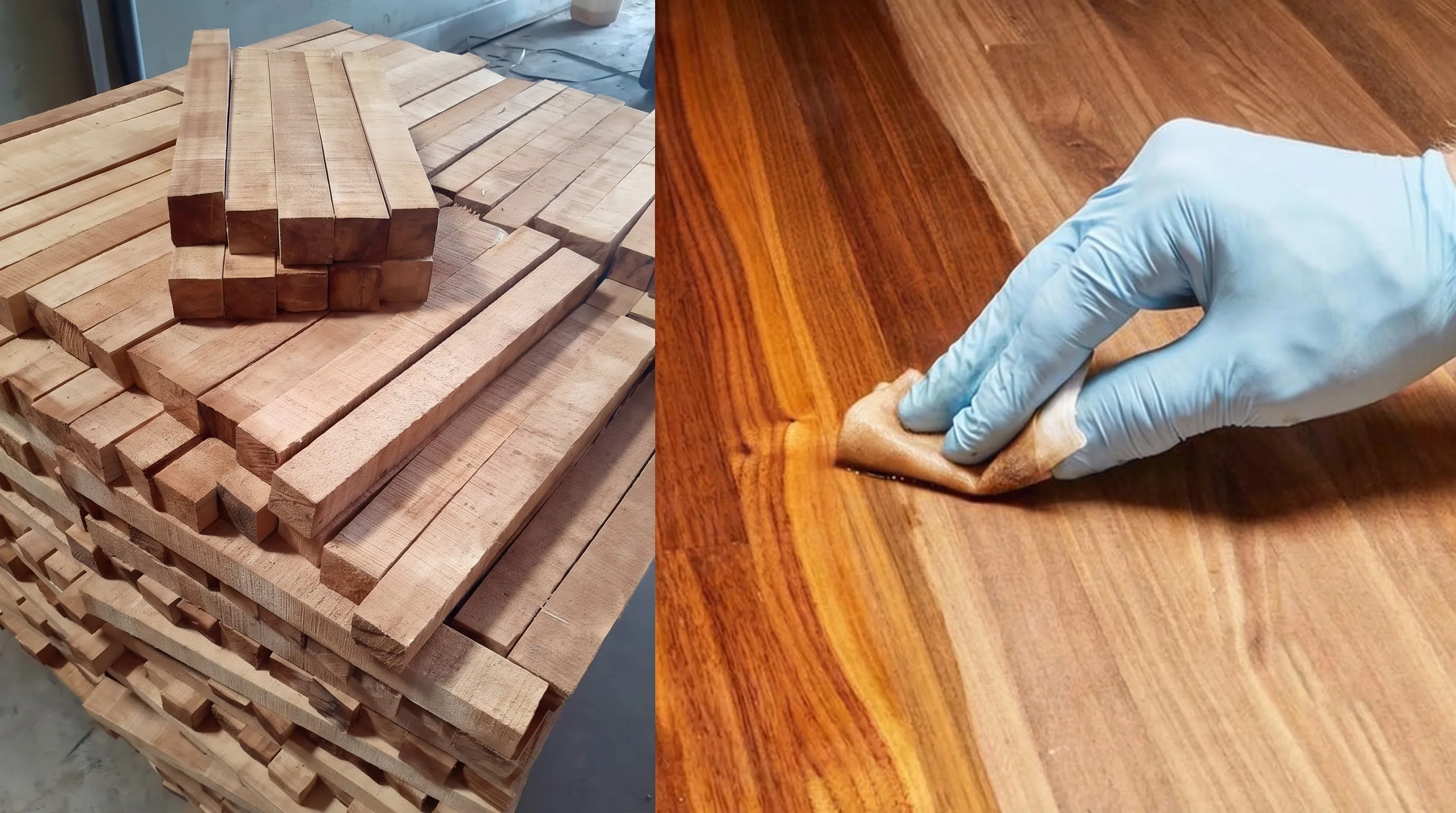
CNC machining solid timber, plywood and MDF
Each material has different structure, grain and edge risks; tooling and surface criteria must follow the actual lot.
Solid timber
Specify species, grain direction, blank condition, permitted defects and allowance.
Plywood
Confirm thickness, ply structure, face finish and edge requirement for the actual sheet.
MDF
State board type, thickness, coating if any and required post-machine finish.
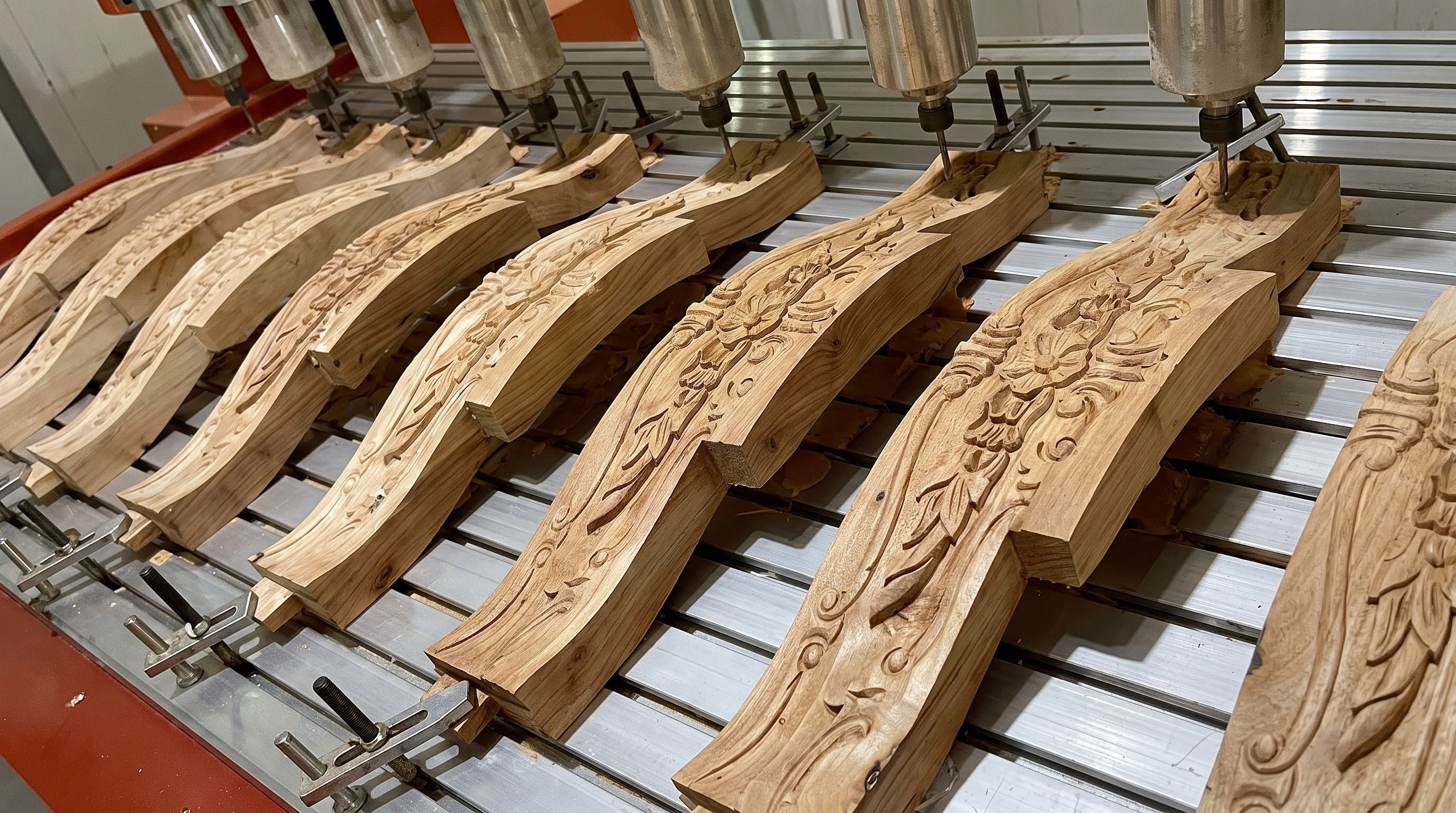
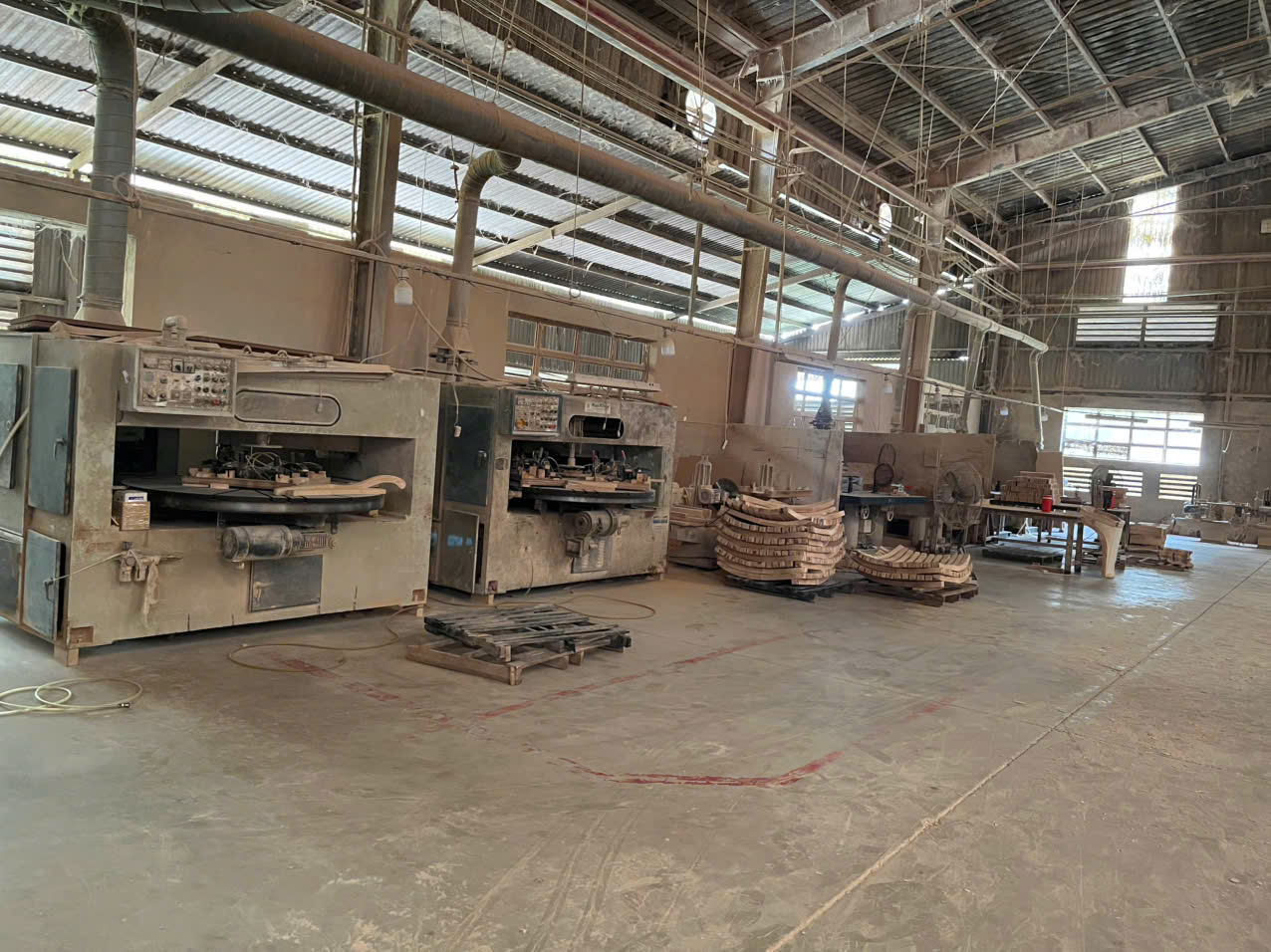
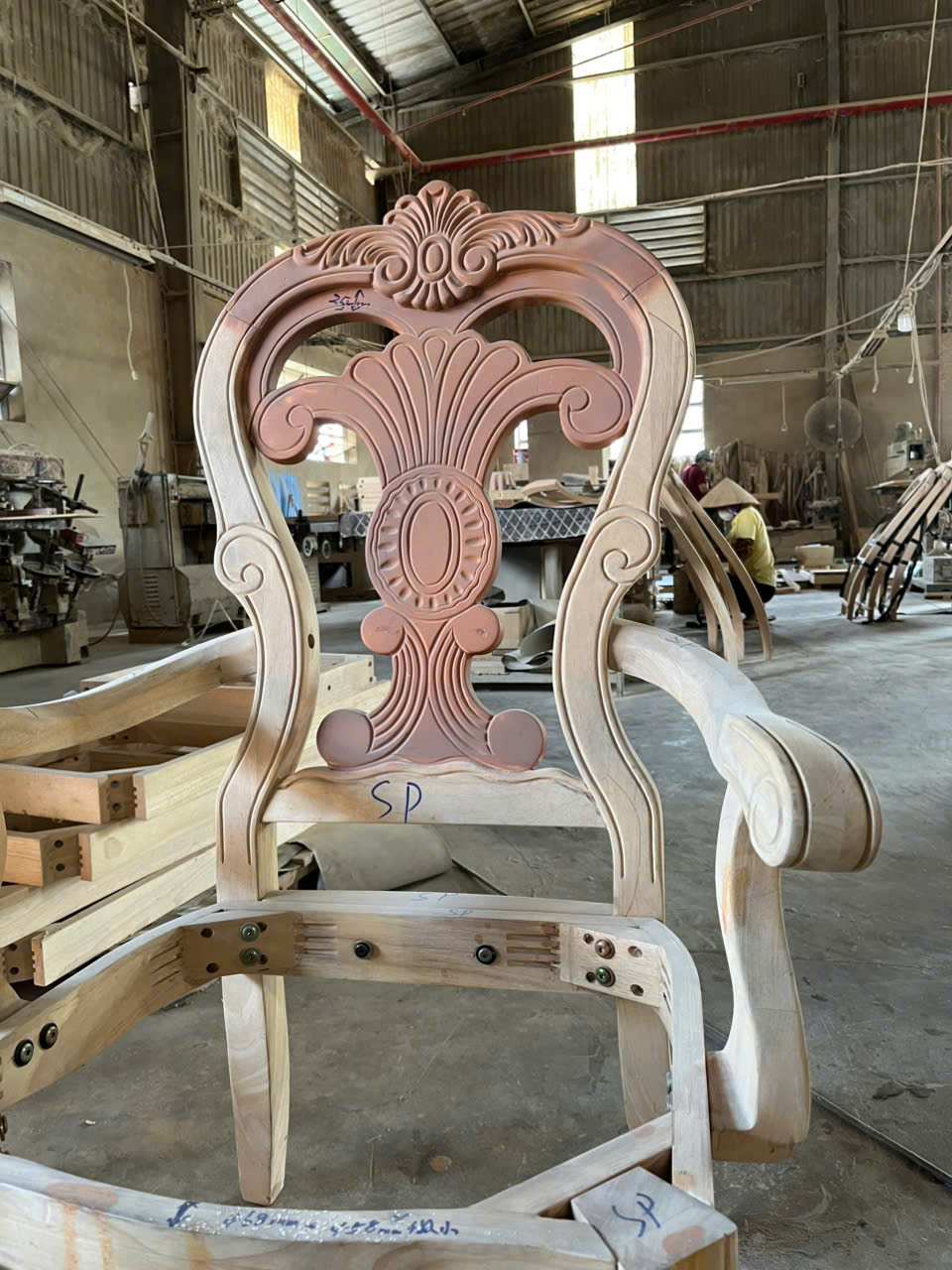
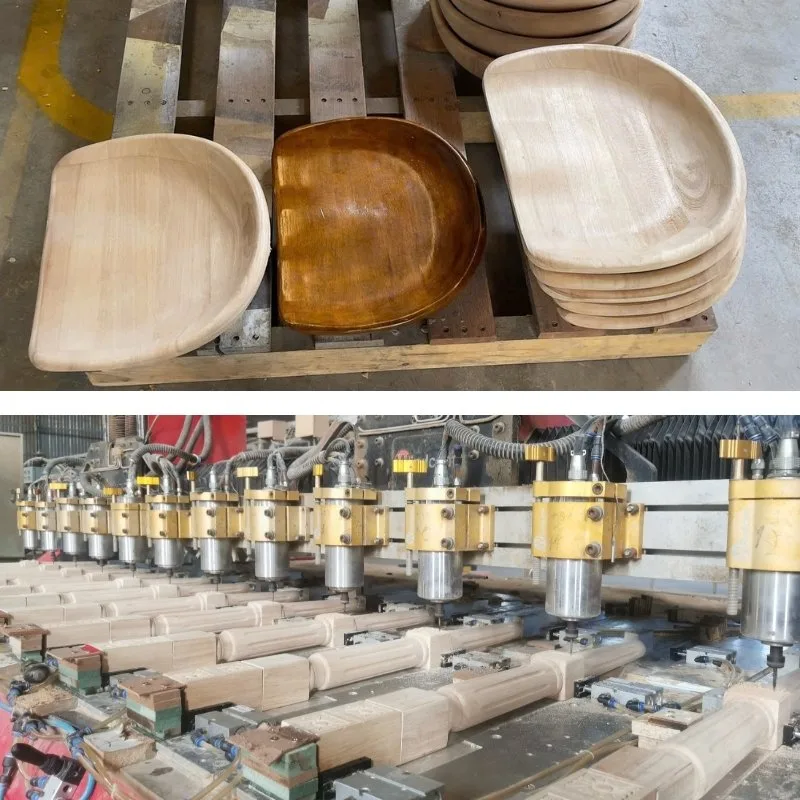
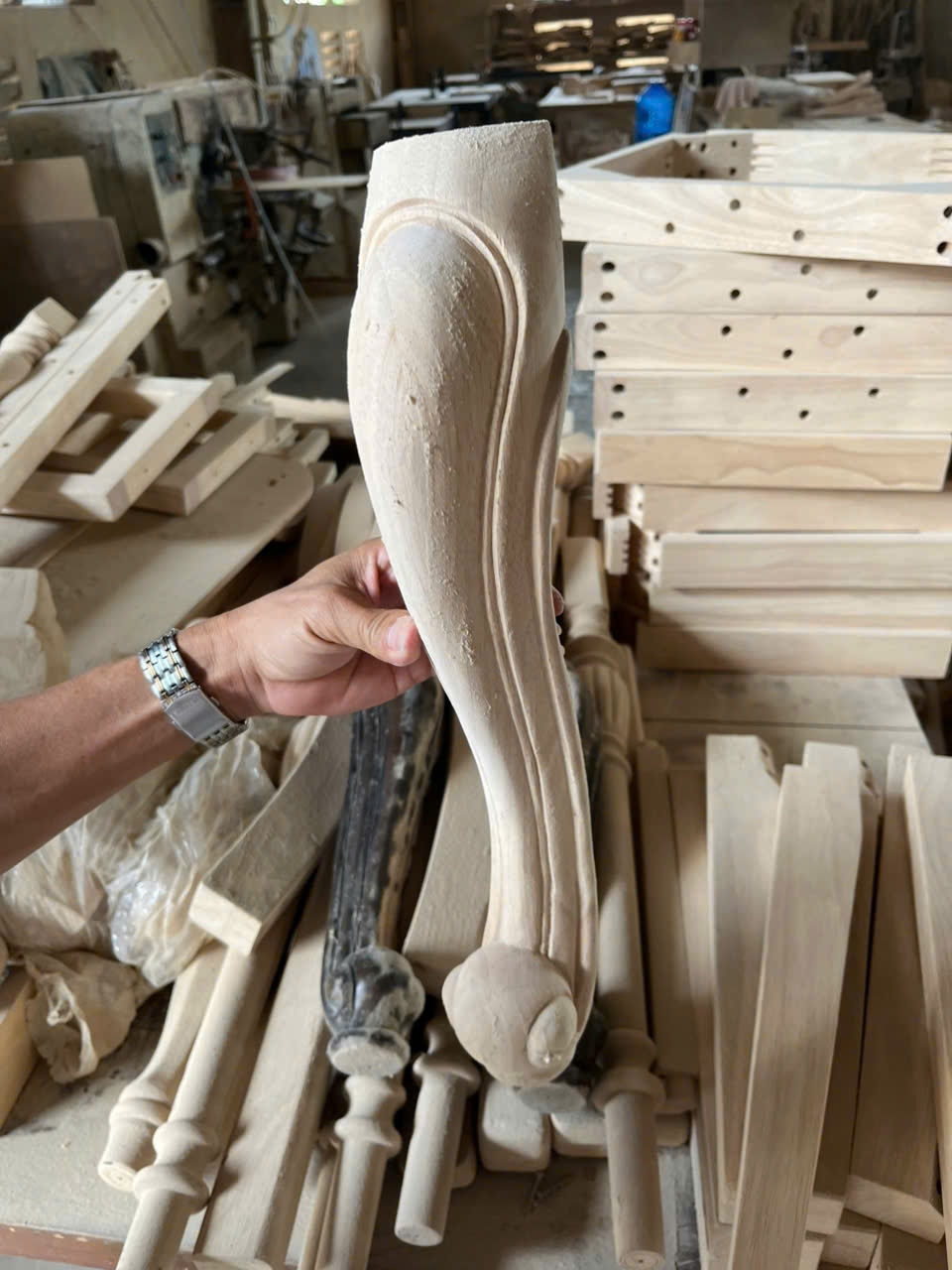
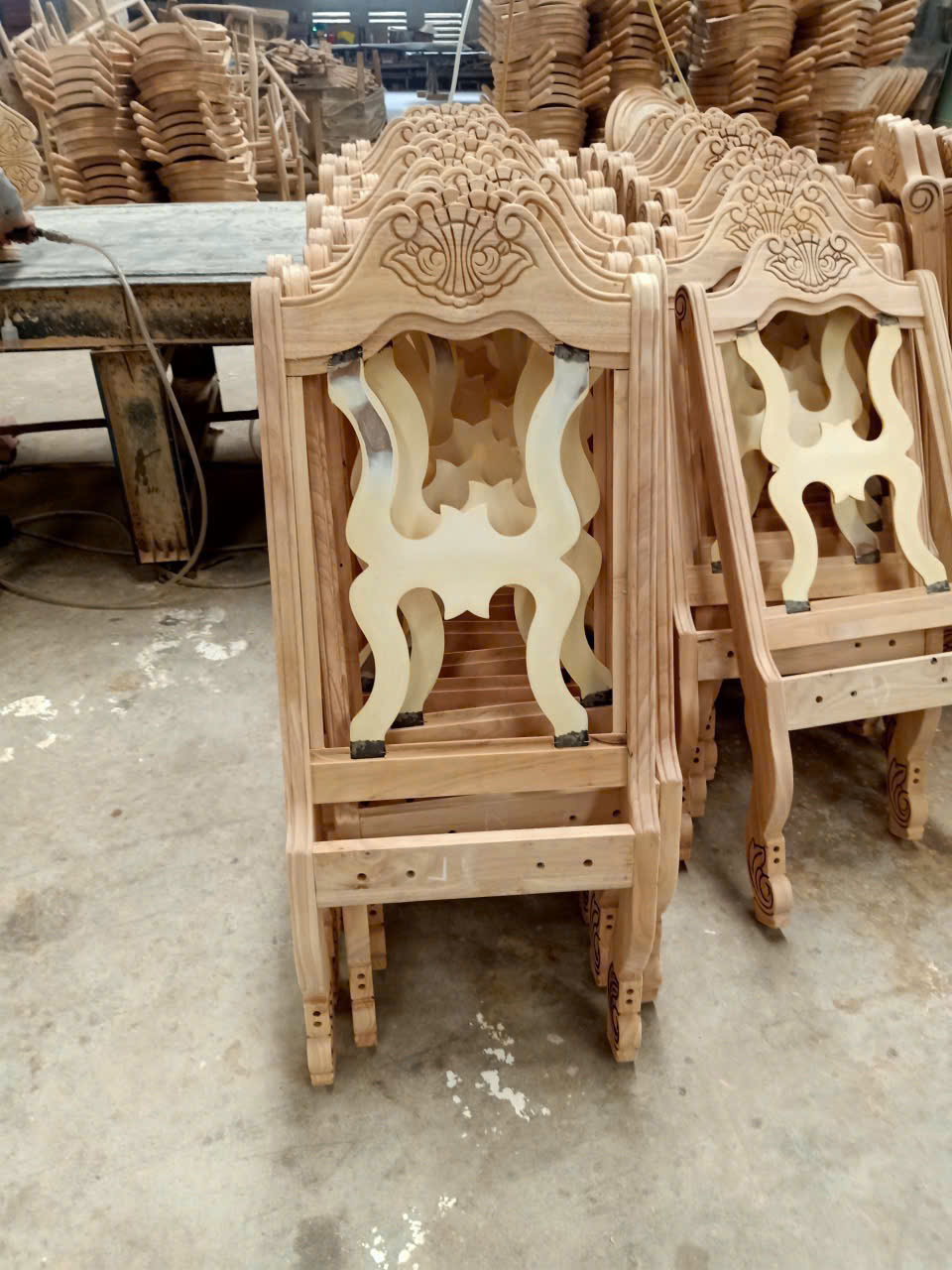
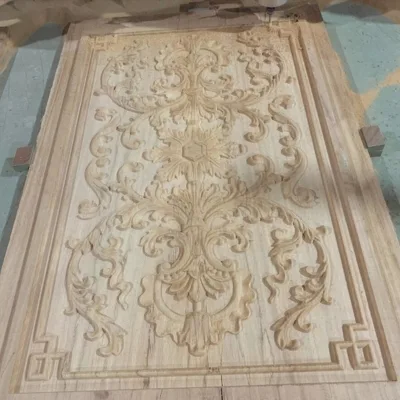
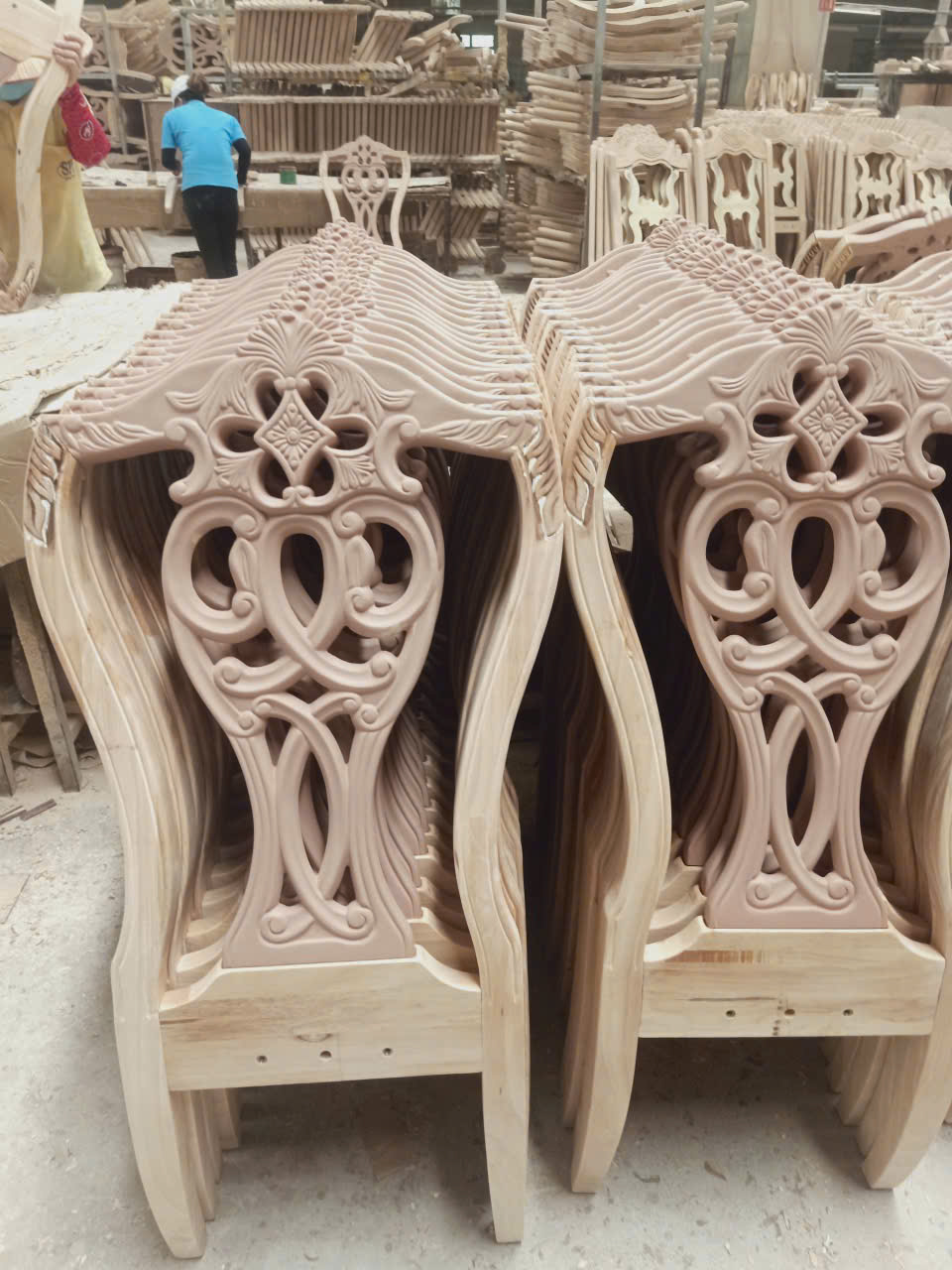
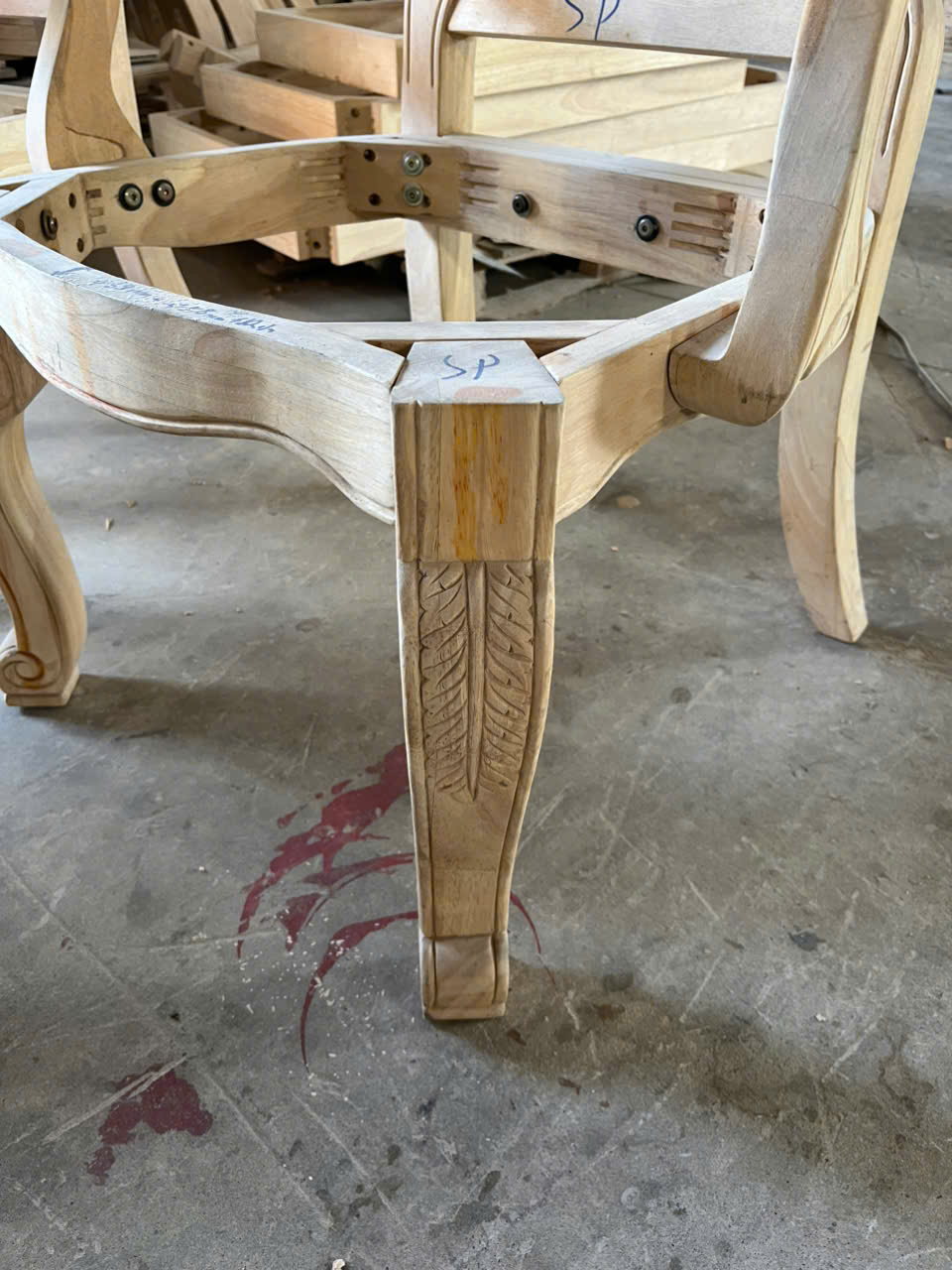
Machining service images
Images help identify the part category and surface to discuss. Drawings, material, and inspection criteria still govern a specific order.
What should you send for review?
Clear inputs make quotations and approval samples easier to compare. Mark missing items for workshop review instead of assuming them.
Drawing and revision
Send a dimensioned file with units, material and revision name. Mark datum surfaces and mating features.
Blank and quantity
State blank dimensions, material responsibility, prototype quantity and expected batch size.
Delivery condition
Define machining scope, required surface condition, packaging and delivery location.
From request to delivery
1. Input review
The workshop reviews files, blanks, quantities and missing information before proposing a method.
2. Agree scope and sample
Both sides agree the drawing revision, cost, schedule, sample requirement and acceptance criteria.
3. Machine and inspect
Parts are machined to the agreed scope and checked at the specified features.
4. Deliver and retain revision
Deliver using the agreed packaging and retain the approved revision for repeat orders.
Factors that affect the quotation
Machine and setup time
Setups, machined faces and toolpath length affect production time.
Material and tooling
Hardness, grain, thickness and finish requirements determine tooling and cutting strategy.
Quantity and inspection
Quantity changes how setup cost is spread; special inspection must be included in scope.
TTW can confirm price, schedule, sample fees and warranty scope only after reviewing the order data. This page is not a quotation or a technical guarantee for a specific part.
What should sample approval and inspection cover?
- Correct drawing revision and agreed material.
- Dimensions checked at important mating features.
- Appearance and surface compared with the approved requirement.
- Nonconformity handling agreed before batch production.
Frequently asked questions
Can you quote from a reference photo?
A photo helps identify the form, but pricing may change without dimensions, material, quantity and finishing scope. Add a drawing or measured information.
Can the workshop make one prototype?
Prototype feasibility, cost and timing are confirmed after reviewing the file and blank. The approval sample should have a clear revision and inspection criteria.